Healthcare & Life Sciences
As of 2026-10-06
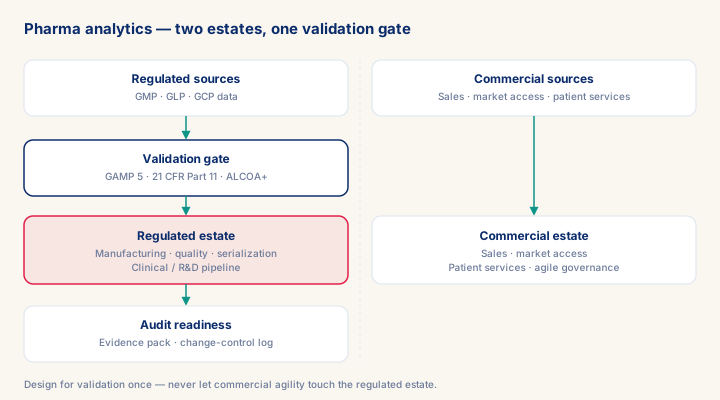
Life sciences (the Pharma demand block, ~14% of EMEA SAP analytics demand) is the vertical where the system's validated state is a design constraint — in GxP, changing an analytics model is itself regulated. Validated systems (GAMP 5, FDA 21 CFR Part 11, EMA) require formal change control + audit trails; design analytics to be validatable, don't retrofit. ALCOA+ is the data-integrity bar, making lineage (M077) and retention (M071) compliance primitives. Keep the regulated estate (manufacturing/quality/serialization/clinical) cleanly separated from the commercial estate. Batch genealogy + serialization are the signature high-integrity data shapes. The validation barrier excludes generalists → scarce, rate-setting work.
What you will learn
- Work through a realistic scenario: Pharma manufacturer, S/4HANA for life sciences, GMP manufacturing + EU FMD serialization, FDA + EMA oversight, wants quality + commercial analytics on SAC/Datasphere.
- Recognize and avoid the anti-pattern: Treating pharma analytics like retail (free model changes) — Validated state broken; failed audit can halt product release.
- Apply the module's core decision: Validatable design vs retrofit — choose Design for validation (traceability, controlled change) from day one, not Building freely then retrofitting validation.
- Track mastery with the KPI: Validation coverage (target: All regulated analytics validated (GAMP 5); red flag: Regulated dashboards with no validation evidence).
Module overview
Healthcare & life sciences sits inside the pharma demand block that accounts for a meaningful share — roughly 14% — of EMEA SAP analytics demand, but the number that matters more than the market size is the operating constraint underneath it: in a GxP environment, the system's validated state is a first-class design constraint, not a compliance afterthought bolted on at the end. A consultant who doesn't understand validation will, sooner or later, ship an analytics change that fails an audit — and unlike most industries, a failed audit in pharma is not a paperwork problem, it can halt a product release, which is a commercial event measured in weeks of lost revenue, not a footnote in a steering committee deck.
Prerequisites
- Intermediate hands-on experience on SAP analytics projects
- Review core concepts first: C087, C083, C046
Outcomes
- Work through a realistic scenario: Pharma manufacturer, S/4HANA for life sciences, GMP manufacturing + EU FMD serialization, FDA + EMA oversight, wants quality + commercial analytics on SAC/Datasphere.
- Recognize and avoid the anti-pattern: Treating pharma analytics like retail (free model changes) — Validated state broken; failed audit can halt product release.
- Apply the module's core decision: Validatable design vs retrofit — choose Design for validation (traceability, controlled change) from day one, not Building freely then retrofitting validation.
- Track mastery with the KPI: Validation coverage (target: All regulated analytics validated (GAMP 5); red flag: Regulated dashboards with no validation evidence).
Full module available to members. The full module adds: the decision framework · the end-to-end scenario walkthrough · the KPI scorecard · the anti-patterns · the code blocks · the knowledge check · the diagrams.