Harvard Negotiation: BATNA, ZOPA, Interests
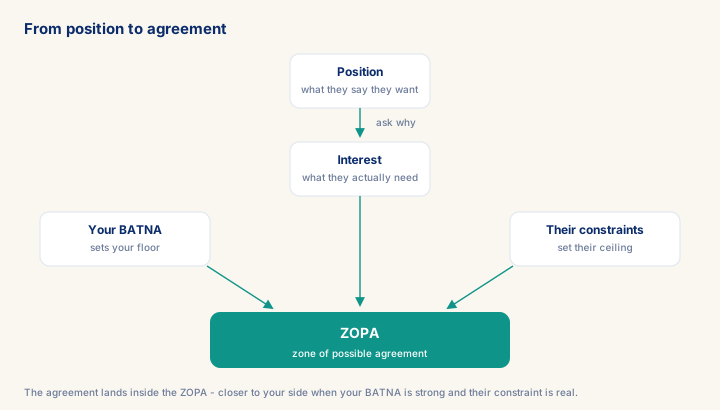
As of 2026-10-03
A consultant who only argues price is negotiating with one hand tied: reveal your BATNA by accident and you lose leverage; accept a client's stated position at face value and you routinely leave €70-100/day on the table on a six-month extension - €8,000-13,000 in total. This module gives SAP analytics consultants the Harvard Negotiation Project's core tools - BATNA, ZOPA, and the position/interest distinction - to run rate and scope conversations with a partner's composure instead of a contractor's anxiety. The career stake: consultants who negotiate well on every extension compound into a 15-25% higher day rate over a five-year freelance career than those who accept the first offer each time.
What you will learn
- Distinguish interests from positions in a consulting context and use that distinction to open rate and scope negotiations
- Calculate a credible BATNA before any extension or engagement negotiation and use it as an anchor, not a threat
- Map the ZOPA for a given negotiation by estimating both parties' walk-away points and identify the range where agreement is possible
- Apply principled negotiation to convert scope-creep conversations into structured change-request discussions
The conceptual error most consultants make before negotiating
The Harvard Negotiation Project, developed at Harvard Law School by R. F. and W. U. and published as Getting to Yes in 1981, built its framework on one empirical observation: negotiators confuse positions with interests, and that confusion is the primary source of impasse. A position is what someone says they want. An interest is why they want it.
A consulting firm's procurement manager says: «We cannot go above €850/day for SAP analytics profiles» — that is a position. The underlying interests might be: budget ceiling for the quarter, internal pay-equity concerns, a benchmarking exercise against two other suppliers, or a directive from the CFO to cut external spend by 15% ahead of a board review. Each of these interests opens a different path to agreement. None of them is visible in the position.
Senior consultants who negotiate only at the position level leave value on the table and generate unnecessary conflict. The framework below gives you the tools to move below the surface.
Prerequisites
- Intermediate hands-on experience on SAP analytics projects
- Review core concepts first: C083, C079, C058
Outcomes
- Work through a realistic scenario: A SAP Datasphere consultant at a European retail group is six weeks from the end of a 9-month engagement and wants a 6-month extension at a higher day rate.
- Recognize and avoid the anti-pattern: Naming your rate before understanding their constraint — Anchoring works against you - the first number sets the reference point, and you handed it over for free.
- Apply the module's core decision: When to name a number first.
- Track mastery with the KPI: Rate captured vs BATNA gap (target: Close within 20% of the gap between their opening offer and your documented floor).
Full module available to members. The full module adds: the decision framework · the end-to-end scenario walkthrough · the KPI scorecard · the anti-patterns · the knowledge check · the diagrams.