Pitching to C-Level
As of 2026-10-03
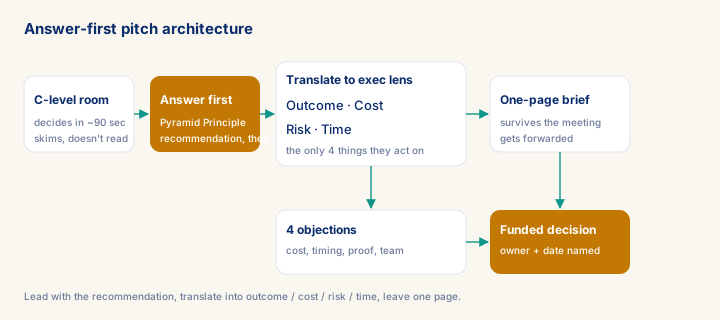
Most SAP analytics consultants lose a C-level room in the first ninety seconds by presenting like engineers instead of leading with the answer. This module drills the Pyramid Principle opening, the outcome/cost/risk/time translation, and the four-objection playbook that turn a technical update into a funded decision. The single highest-leverage move: walk in with one page, not a deck — it is what gets forwarded to the people who weren't in the room and actually release budget. Consultants who can run this room bill above the day-rate-for-hands tier, because they are selling the outcome the executive is buying, not the hours underneath it.
What you will learn
- Restructure a technical update into an answer-first executive narrative
- Translate SAP analytics work into the CFO/CIO lens — outcome, cost, risk, time
- Run the one-page brief and the disciplined demo that survive a C-level room
- Handle the four executive objections without retreating into technical detail
Module overview
Most SAP analytics consultants lose the C-level room in the first ninety seconds — not because the work is weak, but because they present it like engineers: context first, detail in the middle, conclusion at the end, if at all. Executives decide early and skim; they reward the speaker who leads with the answer and earns the right to detail. This module is the structure, the translation discipline, and the objection handling that turn a strong analytics programme into a funded one.
Prerequisites
- Intermediate hands-on experience on SAP analytics projects
- Review core concepts first: C047, C008, C087
Outcomes
- Work through a realistic scenario: A European grocery retailer's SAP analytics lead has ten working days before the board investment committee decides whether to fund a Datasphere consolidation ahead.
- Recognize and avoid the anti-pattern: Burying the recommendation under context — The room has already decided — or tuned out — before the point arrives, losing the first and most attentive 90 seconds.
- Apply the module's core decision: How to open the room — choose State the recommendation and its business consequence in one sentence first (Pyramid Principle), then support it, not Opening with context.
- Track mastery with the KPI: Time-to-recommendation (target: Recommendation stated within the first 60-90 seconds of the meeting; red flag: Still no recommendation stated after 3 minutes).
Full module available to members. The full module adds: the decision framework · the end-to-end scenario walkthrough · the KPI scorecard · the anti-patterns · the knowledge check · the diagrams.