Writing LinkedIn Posts That Get Read
As of 2026-10-03
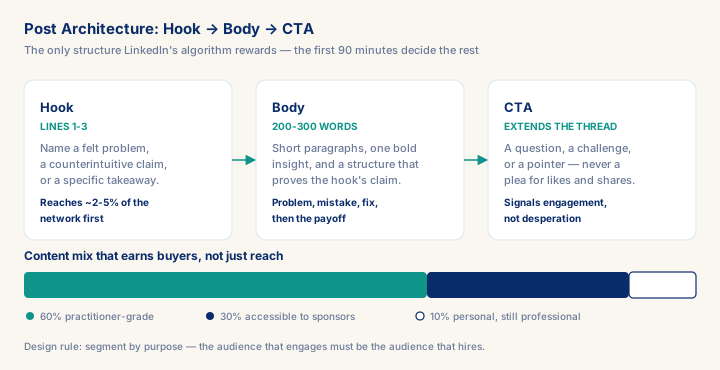
Most SAP consultant LinkedIn posts die in the first three lines: the algorithm samples reach from roughly 2-5% of a network within the first 90 minutes, and only pushes a post further if that sample clicks "see more". This module rebuilds the post around a hook-body-CTA architecture and a 60/30/10 content mix that trades vanity reach for the dozen buyers who actually hire. The stake is direct: a practice lead who has already read a dozen practitioner-grade posts starts the rate conversation from calibrated credibility instead of zero. Leave with a posting cadence built to survive a go-live week rather than go dark for six months.
What you will learn
- Diagnose why most SAP consultant LinkedIn posts get zero traction — and what structurally changes that
- Apply the hook-body-CTA architecture to B2B content that earns reach without sacrificing credibility
- Choose post formats (text, carousel, image) matched to your goal: visibility, authority, or pipeline
- Build a sustainable posting cadence that survives client delivery peaks without going dark for months
Why SAP Consultant Posts Disappear
Most SAP analytics consultants write LinkedIn posts the way they write project status reports: structured, accurate, thorough, and completely invisible. The algorithm does not reward accuracy. It rewards the first three lines.
LinkedIn shows a post to a small sample of your connections. If they stop scrolling and click "see more" within the first 90 minutes, the post gets pushed further. If they scroll past, it dies. Practitioner analyses put that first sample at roughly 2–5% of your network; LinkedIn does not publish the figure. Everything follows from the hook.
The three-line test. Read only the first three lines of your last post. Would you click "see more" if you didn't already know the answer? Most consultants fail this test because they open with context-setting — "I've been working with a client on BW/4HANA migration" — before they've given the reader a reason to care. By the time the interesting part arrives, nobody is still reading.
The fix is structural, not about writing talent.
Prerequisites
- Review core concepts first: C083, C078, C087
Outcomes
- Work through a realistic scenario: An independent SAP analytics consultant finishing a Datasphere migration wants three qualified inbound conversations before their next rate renegotiation.
- Recognize and avoid the anti-pattern: Posting a recognisable client case without permission — Even anonymised, a client who recognises their own project turns a credibility post into a professional liability.
- Apply the module's core decision: Which hook type to open with — choose Lead with a problem hook when you have a number tied to real pain.
- Track mastery with the KPI: Three-line hook survival (target: Post text passes the "would I click see more" test cold; red flag: Post opens with context-setting before a specific claim or number).
Full module available to members. The full module adds: the decision framework · the end-to-end scenario walkthrough · the KPI scorecard · the anti-patterns · the knowledge check · the diagrams.