The Photo That Changes Everything
As of 2026-10-03
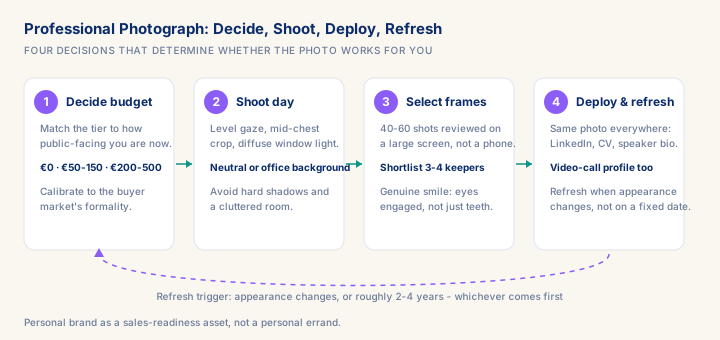
A LinkedIn viewer forms a first impression in under three seconds, almost entirely from the photograph, before your headline is even read. For an SAP analytics consultant pursuing day-rate mandates, that photograph is the first deliverable in the sales process, not a personal errand. The decision that matters is budget tier and market calibration: a DACH programme director reads a photo differently than an Amsterdam or Stockholm client, and a photo that no longer matches your current appearance creates a trust gap the moment you walk into the room. This module gives the recognition patterns behind a credible headshot (gaze, framing, light, background) and a refresh trigger, so the photograph keeps working for you instead of quietly working against you.
What you will learn
- Understand what visual signals communicate competence, seniority, and approachability to SAP clients and hiring managers before a word is read
- Identify and eliminate the specific photographic mistakes that mark a consultant as junior or careless in a European enterprise context
- Plan and execute a professional headshot session on any budget, from a €50 local photographer to a smartphone self-shoot
- Deploy your photograph consistently across LinkedIn, project bids, conference slides, and thought leadership content for compounding brand recognition
Why a Photograph Is a Business Decision
When a programme director at a DACH manufacturer opens your LinkedIn profile, they spend only a few seconds forming a first impression before reading your headline. That impression is almost entirely visual. For an SAP analytics consultant, the photograph is not vanity — it is the first deliverable in a sales process that can be worth €300,000 in annual contracting revenue.
The European enterprise market is conservative in its visual cues. A photograph that reads as polished and confident in a US startup context can read as too casual in a Frankfurt boardroom. Understanding that distinction is the first competence to develop.
What the Image Communicates Before You Do
Eye contact and gaze direction are the single most powerful variable in a professional photograph. Direct, level eye contact signals that you are used to being in rooms with senior stakeholders. Eyes angled down signal submission. Eyes angled up signal inexperience or arrogance. The ideal gaze is level with the camera lens, slightly narrowed — the expression of someone who has just listened carefully and is about to say something worth hearing.
Prerequisites
- No prior module required. Most useful after M216-M219 (conference speaking, podcasting, video, case studies) if you are building the full personal-brand sequence.
Outcomes
- Read what gaze, framing, background, and lighting each communicate in a photograph, before a word of text is read.
- Apply the budget-tier decision framework to book and execute a headshot session, from a €0 smartphone shoot to a €200-500 branding session.
- Calibrate attire and formality to a specific European buyer market (DACH, Benelux/Nordics, France).
- Set a refresh trigger and deploy one consistent photograph across LinkedIn, CV, speaker bios, and video calls.
Full module available to members. The full module adds: the decision framework · the end-to-end scenario walkthrough · the KPI scorecard · the anti-patterns · the knowledge check · the diagrams.