Case Studies: The Ultimate Sales Asset
As of 2026-10-03
A consultant with a written case study portfolio negotiates from a different position than one who says "I've done similar projects before" — the difference is proof versus assertion. The core discipline is the Problem-Action-Result spine, honest quantification, and a permission process that unlocks specificity even under confidentiality. A single case study documenting a result that dwarfs the fee — a €2M/year efficiency gain against roughly €120k–150k in fees for the six-month engagement that produced it — turns the day-rate conversation from negotiation into confirmation. This module gives the writing structure, the anonymisation script, and the funnel placement to build that asset from the project just finished, not the one still being waited for.
What you will learn
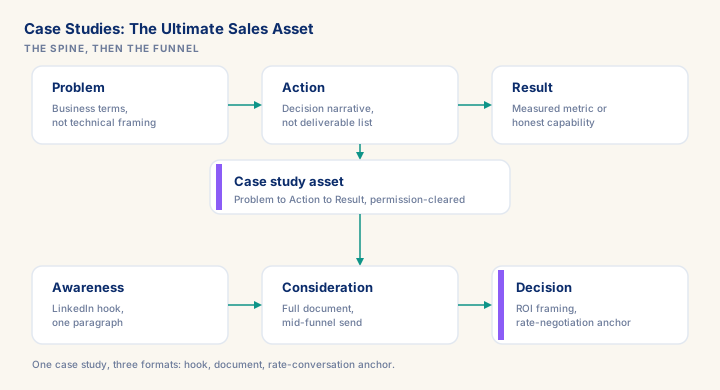
- Structure a client case study using the Problem-Action-Result spine — writing the Problem in business terms (not technical terms), the Action as a decision narrative rather than a deliverable list, and the Result with quantified metrics or honest capability descriptions when hard numbers are absent
- Navigate the client permission conversation by offering a fully anonymised version for review, using specific anonymisation strategies (descriptor instead of company name, ranges instead of exact figures, role instead of executive name) that preserve project specificity while respecting confidentiality
- Quantify outcomes with precision and honest attribution — distinguishing your specific contribution from project-level results, avoiding fabricated metrics, and using capability descriptions when before-after measurements are unavailable
- Deploy a case study portfolio of three to five documented projects across the full sales funnel: summary hook for awareness-stage LinkedIn posts, full document for mid-funnel consideration, and ROI framing as a rate-negotiation anchor at decision stage
Why the case study is the most powerful asset in the SAP analytics funnel
A CV tells a prospective client what you have done. A case study shows them how you think, what problems you can solve, and what outcomes you have produced — for a client similar enough to them that they can see themselves in the story. This distinction matters enormously in SAP analytics, where project complexity is high, the difference between consultants of similar seniority is often in judgment and methodology rather than technology familiarity, and clients are making expensive, long-duration commitments.
The typical SAP analytics consultant does not have a single case study, because no one has asked them to write one and the client confidentiality question feels like an insurmountable barrier. Both problems are solvable. A well-structured case study operates throughout the entire sales funnel — it can generate inbound interest, support a pitch deck, handle objections in a sales conversation, and serve as a proof point in a rate negotiation. No other content asset achieves all four.
Prerequisites
- Intermediate hands-on experience on SAP analytics projects
- Review core concepts first: C058, C052, C077
Outcomes
- Work through a realistic scenario: A consultant has just finished a six-month SAP BPC planning implementation for a mid-size manufacturing client and has never written a case study before.
- Recognize and avoid the anti-pattern: Writing from your own perspective instead of the client's — The case study reads like a CV line item, not a story the prospective client can see themselves.
- Apply the module's core decision: Named vs. anonymised case study — choose Default to anonymised (descriptor, ranges, roles instead of names).
- Track mastery with the KPI: Portfolio size (target: 3-5 documented case studies across distinct project types; red flag: Zero or one case study after multiple completed engagements).
Full module available to members. The full module adds: the decision framework · the end-to-end scenario walkthrough · the KPI scorecard · the anti-patterns · the knowledge check · the diagrams.