Thought Leadership vs Thought Followership
As of 2026-10-04
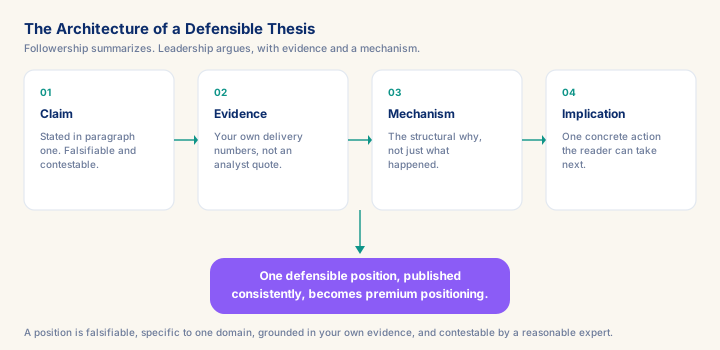
A senior buyer who follows ten SAP analytics consultants on LinkedIn cannot tell most of their posts apart — that is thought followership, and it has a ceiling: it cannot move a rate negotiation. Thought leadership requires one specific, falsifiable claim, formed from your own delivery experience, built on evidence and a stated mechanism — not a paraphrased analyst report or a conference recap. This module gives a four-part thesis structure (claim, evidence, mechanism, implication) and a 90-minute weekly system that produces one substantive article a month. Twelve articles a year change the opening minute of a client conversation: the prospect arrives with the problem already framed in your terms, and the rate conversation starts above the commodity band.
What you will learn
- Distinguish between a genuine point of view on SAP analytics and curated commentary, and identify which you currently produce
- Develop one defensible thesis on a specific SAP analytics topic that reflects your actual experience and can sustain 12 months of consistent content
- Design a content production system that requires 90 minutes per week and generates compounding positioning value without requiring daily activity
- Convert thought leadership content directly into positioning leverage in client conversations and rate negotiations
The Diagnostic Question
Open your last ten LinkedIn posts. Read them as if you were a senior SAP practice director who has been following twelve different SAP analytics consultants for the past year. For each post, ask: could any of the other eleven consultants have written this? If the answer is yes for seven or more of your posts, you are producing thought followership, not thought leadership.
Thought followership is a legitimate activity. It builds network visibility, demonstrates you are engaged with the field, and maintains a presence in a recruiter's awareness. It is useful. But it has a ceiling: it cannot differentiate you, because anyone can summarise a SAP TechEd keynote. It cannot build the premium positioning that converts to higher rates, inbound leads from senior buyers, and conference invitations. Those outcomes require thought leadership — and thought leadership requires something more specific and more uncomfortable: a position you have actually formed through your own work, that some people would disagree with.
Prerequisites
- Intermediate hands-on experience on SAP analytics projects
- Review core concepts first: C084, C087, C083
Outcomes
- Work through a realistic scenario: A consulting director running a Datasphere migration programme wants to convert a recurring in-project observation into a published thesis within one month.
- Recognize and avoid the anti-pattern: The conference summary — Ten takeaways from SAP TechEd or Sapphire that every other engaged consultant at the same event also posts.
- Apply the module's core decision: Which claim to build your thesis around — choose The recurring argument you already make in project meetings that other consultants on the same engagement do not make.
- Track mastery with the KPI: Position specificity (target: Claim is contestable by a named, reasonable expert).
Full module available to members. The full module adds: the decision framework · the end-to-end scenario walkthrough · the KPI scorecard · the anti-patterns · the knowledge check · the diagrams.