Burnout: Recognizing It Before It's Too Late
As of 2026-10-06
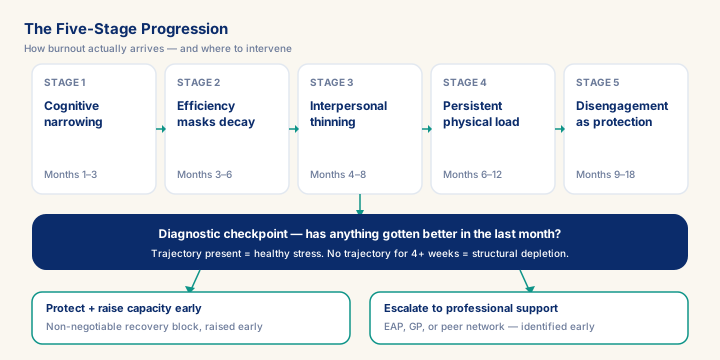
Burnout in SAP analytics consulting builds for six to eighteen months before the stage most people picture — sobbing in the car park — while billable hours, client feedback, and the SteerCo slide all still look fine. This module gives consultants the five-stage progression to name it early and the one diagnostic question that separates healthy stress from structural depletion: has anything gotten better this month? The two interventions with the best evidence are protected, non-negotiable recovery time and a capacity conversation raised months before crisis — not after it. The stake is not only wellbeing: a consultant who can describe how they structure high-intensity phases with defined endpoints is now read by sophisticated buyers as lower delivery risk, which is a rate-negotiation advantage, not a vulnerability to hide.
What you will learn
- Identify the five progressive stages of burnout as they manifest in a consulting career, before they reach clinical severity
- Distinguish between situational stress with a recovery trajectory and structural depletion requiring intervention
- Apply at least two concrete prevention practices — protected recovery time and workload transparency — to your current engagement
- Know the escalation path for professional support, whether as an employee or as a freelance consultant
The Slow Boil Nobody Sees Coming
High-performing SAP analytics consultants are structurally exposed to burnout in ways most burnout literature misses. The classic picture — sobbing in the car park, unable to get out of bed — is the end stage. What precedes it by six to eighteen months is subtler: a SAP HANA performance tuning specialist who stops reading the release notes she used to devour; a Datasphere architect who has delivered four consecutive successful go-lives but feels nothing when the final transport lands; a BW/4HANA lead who starts padding timelines not because the work requires it but because he cannot bear the thought of being handed another workstream immediately after.
These are not signs of professional decline. They are signs of a nervous system running a sustained deficit — and the consulting model makes them easy to miss. Billable hours look fine. Client feedback looks fine. The SteerCo slide looks fine. You look fine. Until, suddenly, you don't.
This module names the mechanisms, the warning signals as they actually appear in practice, and the recovery logic — grounded in what works for consultants operating under real project constraints, not idealised advice written for office workers with predictable schedules.
Prerequisites
- Review core concepts first: C093, C047, C100
Outcomes
- Work through a realistic scenario: A senior Datasphere architect is five months into back-to-back hypercare support for a European retail client — four consecutive successful go-lives, glowing client feedback.
- Recognize and avoid the anti-pattern: Treating burnout as a planning problem — A week off recharges the tank but doesn't fix the leak — symptoms return within days if the structural cause.
- Apply the module's core decision: How to respond to Stage 1–2 signals (narrowing curiosity, hollow efficiency) — choose Name the stage explicitly and protect one non-negotiable recovery block immediately.
- Track mastery with the KPI: Monthly trajectory check (target: An explicit written answer every month; red flag: Three consecutive 'no' months with no new intervention attempted).
Full module available to members. The full module adds: the decision framework · the end-to-end scenario walkthrough · the KPI scorecard · the anti-patterns · the knowledge check · the diagrams.