Preferred-Vendor Status with Integrators
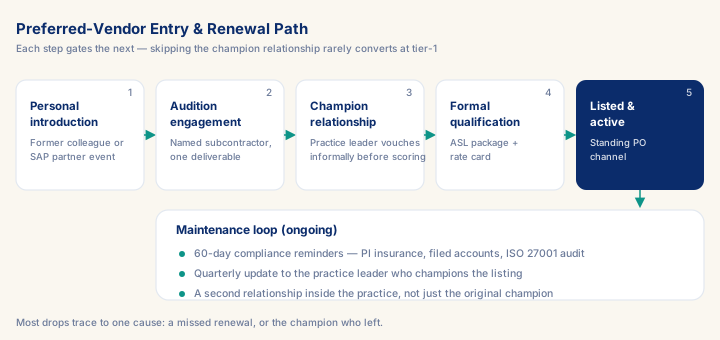
As of 2026-10-03
Tier-1 SI preferred-vendor lists (Accenture, Capgemini, TCS, Infosys) refresh on a 12-18 month cycle, and roughly 90% of the decision is made informally — by a practice leader who already wants your boutique on the list — before the formal supplier qualification ever opens. The entry price is real: minimum annual revenue of €1M-€5M at tier-1 (often €500K at regional SIs), professional-indemnity cover of €1M-€10M, and ISO 27001 or an equivalent security posture. The payoff is a standing purchase-order channel instead of a cold-tender fight for every mandate — but a framework rate submitted 15% below your true cost floor turns a three-year listing into a margin liability, not an asset. This module builds the qualification package, the entry sequence from first subcontract engagement to formal listing, and the renewal discipline that keeps you on the list once the original champion moves on.
What you will learn
- Map the three preferred-vendor tiers (tier-1 global SI, regional SI, boutique-to-boutique) and set realistic qualification timelines for each
- Prepare a compliant supplier qualification package (financial, insurance, security, technical evidence) that meets tier-1 minimum thresholds
- Execute the entry sequence from first subcontract engagement to formal framework listing within 18 months
- Maintain active preferred-vendor status through compliance renewal discipline and proactive relationship upkeep beyond the initial champion
Why Framework Lists Are Won Before the Tender Is Written
Getting onto an SI or integrator's preferred-vendor list is not primarily a procurement exercise — it is a relationship and track record exercise that culminates in a procurement step. The formal qualification process (the vendor questionnaire, the rate card submission, the insurance certificate) is the last 10% of the work. The prior 90% is ensuring that one or two decision-makers inside the SI already want you on the list before the formal process opens.
This matters because most tier-1 SIs refresh their analytics preferred-vendor lists on a 12 to 18-month cycle. The window for new entrants is short, the evaluation panel is small, and the panel members assess vendors based on a mix of formal criteria and informal reputation. Boutiques that wait for the open call and respond cold rarely make the cut. Boutiques that have already completed one engagement with a practice leader on the evaluation panel, whose name appears in a reference call that the panel convener makes informally before scoring, are the ones that get through.
Prerequisites
- Intermediate hands-on experience on SAP analytics projects
- Review core concepts first: C087, C083, C067
Outcomes
- Work through a realistic scenario: A 6-person SAP analytics boutique wants a standing purchase-order relationship with a tier-1 SI's DACH analytics practice instead of chasing one-off subcontracts.
- Recognize and avoid the anti-pattern: Applying to a tier-1 approved-supplier list cold, without a prior delivery relationship — The application rarely converts.
- Apply the module's core decision: Which preferred-vendor tier to target first — choose Target regional or national SI shortlists first if you're under €1M revenue or lack ISO 27001 — smaller deal flow.
- Track mastery with the KPI: Time from first subcontract engagement to formal listing.
Full module available to members. The full module adds: the decision framework · the end-to-end scenario walkthrough · the KPI scorecard · the anti-patterns · the knowledge check · the diagrams.