Brownfield vs Greenfield Migration
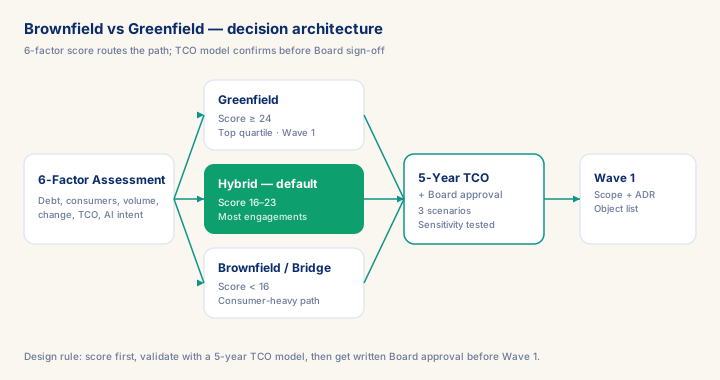
As of 2026-10-04
6-factor decision framework: technical debt density, consumer ecosystem maturity, data volume + history, change management capacity, TCO (licence + CU + delivery), AI/BDC strategic intent. Pure brownfield: inherits debt + bridge licence cost. Pure greenfield: 2× delivery risk + change management cost. Senior pattern: hybrid — greenfield for top quartile, bridge for middle, decommission for bottom. 5-year TCO model required before recommendation.
What you will learn
- Apply the 6-factor decision framework to determine whether a given BW engagement should follow a brownfield (BW Bridge + selective modernisation), greenfield (rebuild in Datasphere/BDC), or hybrid (phased) migration path
- Quantify the TCO difference between brownfield and greenfield for a real client scenario — include licence, infrastructure, delivery effort, and operational cost over 3 and 5 years
- Produce a migration strategy recommendation document that senior stakeholders can use for board-level investment approval
- Identify the three brownfield failure modes (scope creep, technical debt inheritance, bridge permanence) and the three greenfield failure modes (scope under-estimation, skills gap, change management collapse) and apply mitigations
Module overview
The brownfield-versus-greenfield decision gets made in week one of a BW migration programme and its consequences last five years, which is exactly why it deserves a repeatable framework rather than a consultant's gut feel dressed up as expertise. Get it wrong in one direction and the client inherits fifteen years of accumulated technical debt wrapped in a new licence — the brownfield trap. Get it wrong in the other direction and the transformation is underestimated by a factor of two, blowing the budget and the timeline simultaneously — the greenfield trap. What a senior consultant actually brings to this decision is not an opinion; it is a structured, six-factor framework applied consistently and transparently enough that the client's steering committee can follow the logic and own the resulting recommendation, rather than simply trusting the consultant's word for it.
Prerequisites
- Review core concepts first: C034, C035, C033
Outcomes
- Work through a realistic scenario: Austrian chemical company, BW 7.5 on HANA, 2,100 InfoProviders, 45 % with custom ABAP code, 800 BEx query consumers, no SAP Analytics Cloud in production.
- Recognize and avoid the anti-pattern: Path recommendation without 6-factor framework — Recommendation challenged by CTO in week 3; consultant credibility lost.
- Apply the module's core decision: Migration path selection — choose Greenfield when debt density > 50% + AI intent + consumer migration readiness.
- Track mastery with the KPI: 6-factor framework coverage (target: 100 % of in-scope objects scored; red flag: Recommendation made before scoring complete).
Full module available to members. The full module adds: the decision framework · the end-to-end scenario walkthrough · the KPI scorecard · the anti-patterns · the code blocks · the knowledge check · the diagrams.