Scoping: The 90-Minute Conversation That Prevents Disaster
As of 2026-10-03
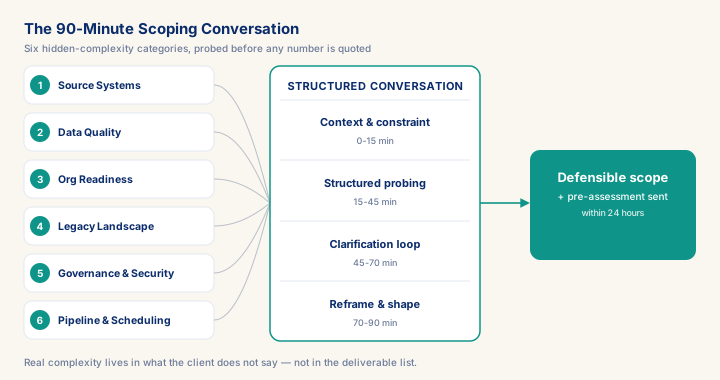
A vague "connect BW to SAC" request costs the same in the first meeting whether it turns into a four-month project or a twelve-month one — the difference gets decided in the next 90 minutes, not later in Explore. This module gives you the six-category probe that turns hidden complexity (unclean source data, undisclosed legacy systems, an unnamed budget owner) into a defensible scope before you commit to a number. On real engagements, undisclosed data debt has consumed 40% of a Realise budget and an undisclosed legacy system has added twelve weeks to a go-live — costs that land on the consultant who scoped too fast. Run this conversation well and you quote on evidence instead of hope, protect your margin from scope creep, and give the client a concrete reason your day rate reflects seniority rather than a body-shop rate.
What you will learn
- Run a structured 90-minute scoping conversation that surfaces hidden complexity before you commit to an estimate
- Identify the six categories of risk that experienced consultants probe in every initial SAP analytics engagement
- Distinguish between scope that clients articulate and scope that actually drives delivery cost
- Calibrate your discovery questions to the client's SAP maturity level and political dynamics
Why the Scoping Conversation Is the Most Leveraged Hour of the Engagement
Every SAP analytics consultant who has underestimated a project traces the damage back to the same moment: the first conversation where they nodded too quickly. The client said "we just need to connect BW to SAC" and you heard a four-week job. Six months later, the project is still open, you are renegotiating scope for the third time, and the relationship is strained. The 90-minute scoping conversation is the single intervention that separates consultants who build profitable, repeatable engagements from those who are perpetually firefighting.
The goal of the conversation is not to collect requirements. Requirements come later, in Explore. The goal is to surface hidden complexity — the things the client either does not know they have or has chosen not to mention — before you sign anything. In SAP analytics, hidden complexity almost always lives in four places: the source systems, the data, the organisation, and the existing landscape. None of these will appear in a Statement of Work unless you specifically forced them out in scoping.
Prerequisites
- Review core concepts first: C058, C047, C087
Outcomes
- Work through a realistic scenario: A European industrial group asks for "a BW-to-SAC connection" after a failed internal attempt. The consultant runs the scoping process before quoting anything.
- Recognize and avoid the anti-pattern: Scoping from the deliverable list ("how many reports do you need?") instead of the six risk categories — The quote prices the reporting layer.
- Apply the module's core decision: Which pricing model to propose — choose Fixed-price only the workstreams where evidence is in hand; quote the rest time-and-materials for Explore.
- Track mastery with the KPI: Post-kickoff scope-change rate (target: Under 15% of SOW line items formally renegotiated in the first 90 days; red flag: Above 30%).
Full module available to members. The full module adds: the decision framework · the end-to-end scenario walkthrough · the KPI scorecard · the anti-patterns · the knowledge check · the diagrams.