Utilities & Energy Analytics
As of 2026-10-10
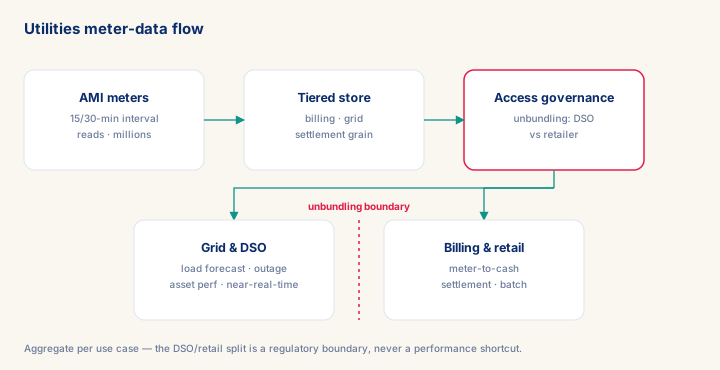
Utilities is the Energy & Utilities demand block — 11% of EMEA SAP analytics demand — and the vertical most reshaped by the energy transition, defined by two forces: AMI interval-data volume and regulatory unbundling. AMI produces 15/30-minute reads across millions of meters — ingest to a purpose-fit store, aggregate per use case (billing daily/monthly, grid interval, settlement market-defined), never force the finest grain into general reporting (M071, amplified). Unbundling (the legal separation of the DSO from the retailer) is a data-access design constraint — get the access governance wrong (M081) and it's a regulatory breach, not a performance bug. Signature use cases: grid analytics (load forecast, outage, asset performance), settlement, ETRM, and DER analytics as solar/battery/EV load reshapes forecasting. SAP IS-U/S4 Utilities + Datasphere + SAC — the volume-plus-regulation barrier is what keeps the day-rate up.
What you will learn
- Design a meter-data tiering strategy that matches AMI interval volume to each use case's real granularity need (billing, grid, settlement)
- Architect unbundling-compliant data access between DSO and retail consumption paths on SAP Datasphere + SAC
- Build a DER-aware load-forecasting approach that accounts for solar, battery, and EV-driven volatility
- Defend the utilities day-rate premium by naming the volume-plus-regulation barrier that keeps generalists out
Module overview
Utilities & energy analytics serves the Energy & Utilities demand block — 11% of EMEA SAP analytics demand — and it is the vertical most reshaped by the energy transition. Two forces define the data: smart-meter volume (advanced metering infrastructure generating massive, high-frequency time-series) and regulatory unbundling (the legal separation of network operators from retailers, which dictates what data can be shared with whom). A consultant who designs around both wins; one who ignores either ships something that's either too slow or non-compliant.
Smart-meter data is the defining volume challenge. AMI (advanced metering infrastructure) produces interval reads — every 15 or 30 minutes, per meter, across millions of meters. This is time-series data at a scale that breaks naive modelling. The senior pattern: ingest interval data into a purpose-fit store, aggregate to the granularity each use case needs (billing = daily/monthly; grid analytics = interval; settlement = market-defined), and never force the finest grain into general reporting (the tiering discipline of companion module M071, amplified by sheer volume).
Prerequisites
- Intermediate hands-on experience on SAP analytics projects
- Review core concepts first: C087, C083, C046
Outcomes
- Work through a realistic scenario: European utility with a regulated DSO arm + a competitive retail arm, smart-meter rollout (millions of meters), SAP IS-U, unbundling obligations, rising rooftop-solar/EV load.
- Recognize and avoid the anti-pattern: Naive modelling of AMI interval data at full grain — Volume breaks the model; queries crawl, costs explode.
- Apply the module's core decision: Meter-data granularity — choose Aggregate per use case; interval only where needed, not Finest interval grain in general reporting.
- Track mastery with the KPI: Meter-data tiering (target: Aggregated per use case, interval only where needed; red flag: Finest interval grain in general reporting).
Full module available to members. The full module adds: the decision framework · the end-to-end scenario walkthrough · the KPI scorecard · the anti-patterns · the code blocks · the knowledge check · the diagrams.